
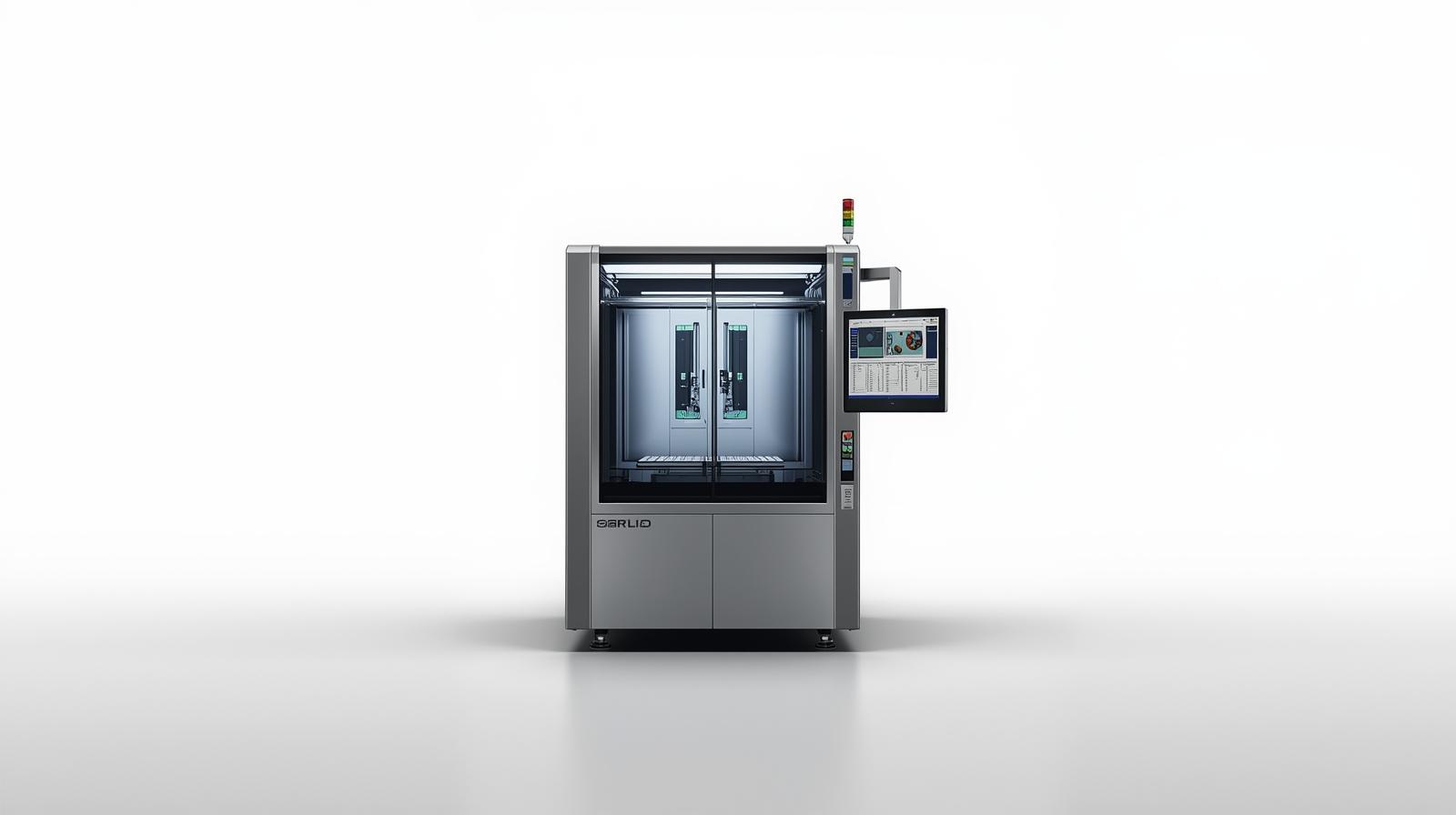
Tray Loader Deep Dive: Practical Engineering, Procurement & Operations Guide
1. Core Value of Tray Loaders (Not a Marketing Soundbite)
To buy smart, use efficiently, and actually make money, first understand what work/risks/costs it replaces:
- Replacing manual labor and stabilizing cycle time: Human errors in tray handling—flipping, misplacement, jamming, fingerprints/dirt causing defects—are eliminated. Properly configured machines run at steady pace with zero mistakes.
- Solving bottlenecks: Modern SMT pick-and-place or programming machines are fast; manual feeding at the tail end becomes a bottleneck. Loader provides buffering and parallel supply, keeping downstream lines running continuously.
- Improving yield & traceability: Integrated vision and barcode/RFID allow batch/serial number/test result traceability, reducing rework costs.
- Supporting night shifts or lights-out: Stable loaders enable night or unattended shifts, increasing overall production utilization.
Takeaway: Real ROI comes from “less downtime + less rework/scrap + less labor cost + increased throughput and delivery flexibility.”
2. Engineering Perspective: Mechanical & Vision Collaboration Key Points
This is the part often overlooked but critical to success.
2.1 Tray Positioning & Fixture Design
- Datum surface: Trays must have identifiable reference (alignment holes or flanges). Fixtures should reference this, not arbitrary edges.
- Clamping method: Side clamp, top press, or magnetic (not recommended for PCB/metal trays). Clamping force must be adjustable: too tight deforms trays, too loose causes slipping.
- Compliance pins: Compensate for tray tolerances (commonly ±0.5mm), improving repeatability.
- Environmental tolerance: Material may expand in humid or temperature-variable environments; design fixtures with margin.
2.2 Vision System Practical Tips
- Lighting: Ring, bar, or backlight depending on tray transparency, reflection, or color.
- Resolution & field of view: For small components (0201/0402) at least 2MP; higher if inspecting pads or lead deformation.
- Calibration & auto white balance: Perform automatic calibration at the start of every shift to avoid drift and false detection.
- Fault tolerance: On recognition failure, move tray to “inspection hold” and generate maintenance ticket instead of stopping the entire line.
2.3 Motion Control
- Servo vs. stepper: Servo preferred for high precision (±0.05mm).
- Homing & repeatability: Use optical or encoder redundancy to prevent encoder drift.
- Smooth acceleration/deceleration (S-curve): Prevent component shifting or damage inside trays.
3. Integration with Downstream Equipment (AOI, Labeling, Programming)
System integration is where most errors happen. Standard handshake & data fields below can go directly into your interface spec:
3.1 Recommended Digital IO (24V Logic)
REQ_PART— output (loader → downstream)READY— outputPICK_OK— input (downstream → loader)ERROR— bidirectional or loader outputTRAY_PRESENT— input (loader sensor)TRAY_OUT— output (tray ejected)
3.2 Ethernet / MES Protocol Fields
job_id— Job numberpart_number— Part numbertray_type— Tray specification IDlot_number— Batch numberqty_in_tray— Quantity per traystart_time/end_time— Timestampstation_result— pass/fail or error codeoperator_id— operator/maintenance ID
3.3 Synchronization Strategy
For programming machines requiring cycle sync, downstream sends REQ_PART, loader responds READY within timeout (≤5s recommended). On timeout, downstream enters safe wait instead of blind retry.
4. Selection: How to Read Specs (Quantifying Requirements)
Procurement often mistakes “marketing numbers” for real performance. Use this quantification workflow.
4.1 Requirement Inputs
- Target throughput (UPH/day/shift)
- Max continuous run time (lights-out?)
- Product mix (tray sizes, min/max components)
- Vision, barcode, laser marking required?
- MES traceability integration needed?
4.2 Key Specs & Acceptance Criteria
- Throughput: Acceptance test ≥95% of target over 8-hour run (including changeover).
- Repeatability: ≤0.05mm (3σ, 50 measurements).
- Tray changeover time: ≤90s (including fixture & recipe load).
- MTTR: critical module replacement ≤60min (motor/encoder/sensor).
- ESD: IEC 61340 compliant (<10^9Ω).
- Interface compatibility: Ethernet/IP, Modbus/TCP, or Profinet.
Include measurable acceptance criteria in RFQ to prevent vague promises.
5. Financial Model: Practical ROI Example
Sample scenario (annual calculation), replace numbers with your factory data.
5.1 Assumptions
- Loader CapEx: $60,000
- Replaces 1.5 operators (including night shift)
- Labor cost: $30,000/year per operator
- Increased throughput revenue: $80,000/year
- Maintenance (spares + labor): $6,000/year
- Scrap/rework reduction: $12,000/year
5.2 Annual Net Benefit
- Labor saved = 1.5 × 30,000 = $45,000
- Add extra revenue = $80,000
- Add scrap reduction = $12,000
- Subtract maintenance = $6,000
- Net annual benefit = $131,000
5.3 Payback
- Payback = CapEx / Net benefit = 60,000 / 131,000 ≈ 0.46 years (~5.5 months)
Note: Account for line adaptation, training, and first-month efficiency drop (~10–20%).
6. Maintenance & Spare Parts
To keep MTTR low, SOPs and spares are essential.
6.1 Daily / Pre-shift (5–10 min)
- Clean lenses and light covers
- Check tray guides for debris
- Check air pressure, lubrication, sensor position
- Software check: no alarms, recipes loaded correctly
6.2 Weekly (30–60 min)
- Check belt/timing belt tension
- Inspect fixture wear
- Backup recipes/configurations
6.3 Monthly
- Replace high-wear components (belts, rubber wheels)
- Calibrate vision system
- Inspect motor/encoder current curves
6.4 Recommended Spare List (6–12 month coverage)
- 2 × emergency servo/stepper drivers
- 4 × common sensors (photoelectric, proximity)
- 2 × main drive belts
- 5 × fixture pads or jaws
- 2 × cameras
- Common capacitors/fuses/connectors
7. Common Faults & Troubleshooting Workflow
Write the following into your maintenance SOP; don’t assume.
7.1 Fault Types & Priority
- P1 (critical line stop): transmission/servo failure, major IO fault, severe vision drift → call on-call engineer immediately
- P2 (partial impact): single sensor/fixture fault → onsite engineer within 2h
- P3 (low priority): UI/log error → after shift
7.2 Typical Diagnostic Steps (Tray not recognized)
- Verify tray placement (physical)
- Check sensor for dust/obstruction
- Inspect sensor status on HMI
- Measure sensor power & wiring with multimeter
- Review vision logs if sensor OK
- Move tray to maintenance station, run single-cycle test
- If still abnormal, switch to spare sensor or temporary manual mode (record event)
8. Procurement RFQ Template (Copy-Paste)
- Model:
- Throughput: X trays/hour or Y pcs/hour (including changeover)
- Tray compatibility: min/typical/max dimensions (mm)
- Repeatability: ≤0.05mm (3σ)
- Interfaces: Ethernet (Modbus TCP/OPC UA), 24V Digital IO, RS-232 (optional)
- Vision: ≥2MP, auto white balance/exposure, detect 0201 empty spots
- ESD compliance: IEC 61340
- Operating environment: 18–28°C, 30–60% RH
- Software: recipe import/export (CSV/JSON), API docs
- Warranty & service: 12 months on-site, 48h response
- Acceptance test: FAT & SAT, 8-hour run ≥95% throughput, logs submitted
- Spares: 12-month consumables & recommended spares with price
9. Case Study (Realistic Implementation)
Scenario: Medium EMS, 2 shifts, IC programming line automation
- Current: 1 operator per shift manually feeding trays, 20k pcs/day; target 30k
- Solution: 1 inline tray loader, 6-tray buffer, 2 parallel programming interfaces (8 sockets), MES integration, 2D code on each tray
- Investment ROI: CapEx $70k, saves 1.5 FTE, extra orders $40k/year → payback 8–10 months
- Acceptance: 8-hour continuous run, <0.1% recognition error, repeatability <0.05mm
- Key steps: tray fiducial & fixture alignment, vision sampling calibration, MES job recipe test
- Result (3 months): +45% throughput, −18% rework, customer satisfied
10. Future Trends (Actionable Tech Points)
- RFID & smart trays: contactless ID, auto line separation; pilot on new lines.
- Edge AI vision: anomaly detection for tray deformation/fixture wear.
- Collaborative robots: flexible picking in high-mix scenarios, lower fixture cost.
- Cloud fleet management: multi-line, multi-site monitoring, MTTR & failure metrics.
- Modular design: stacker, vision, laser marking as replaceable modules to reduce upgrade costs.
11. FAT/SAT Test Cases (Contract-Ready)
- 8-hour continuous run ≥95% throughput
- Recipe changeover ≤90s (fixture included)
- Repeatability: 50 pick/place, 3σ ≤0.05mm
- Vision accuracy: 500 random positions, ≤0.1% error
- ESD: measure ground, operator wrist, record
- IO integrity: REQ/READY/PICK_OK response <100ms
- Recipe download & execution: ≥10 recipes
- Alarm & manual mode: safe mode triggers, manual pick allowed, trace intact
- Onsite training: ≥8h, operators & maintenance, record kept
- Spares delivered & installable, demonstrate replacement onsite
12. One-Sentence Summary (Engineer Style)
For stability, cost-saving, and traceability—standardize trays, standardize MES recipes, then buy a loader supporting precision & vision. All other details matter, but these decide whether you “pay once for decades of stability” or “pay once for a pile of problems.”