
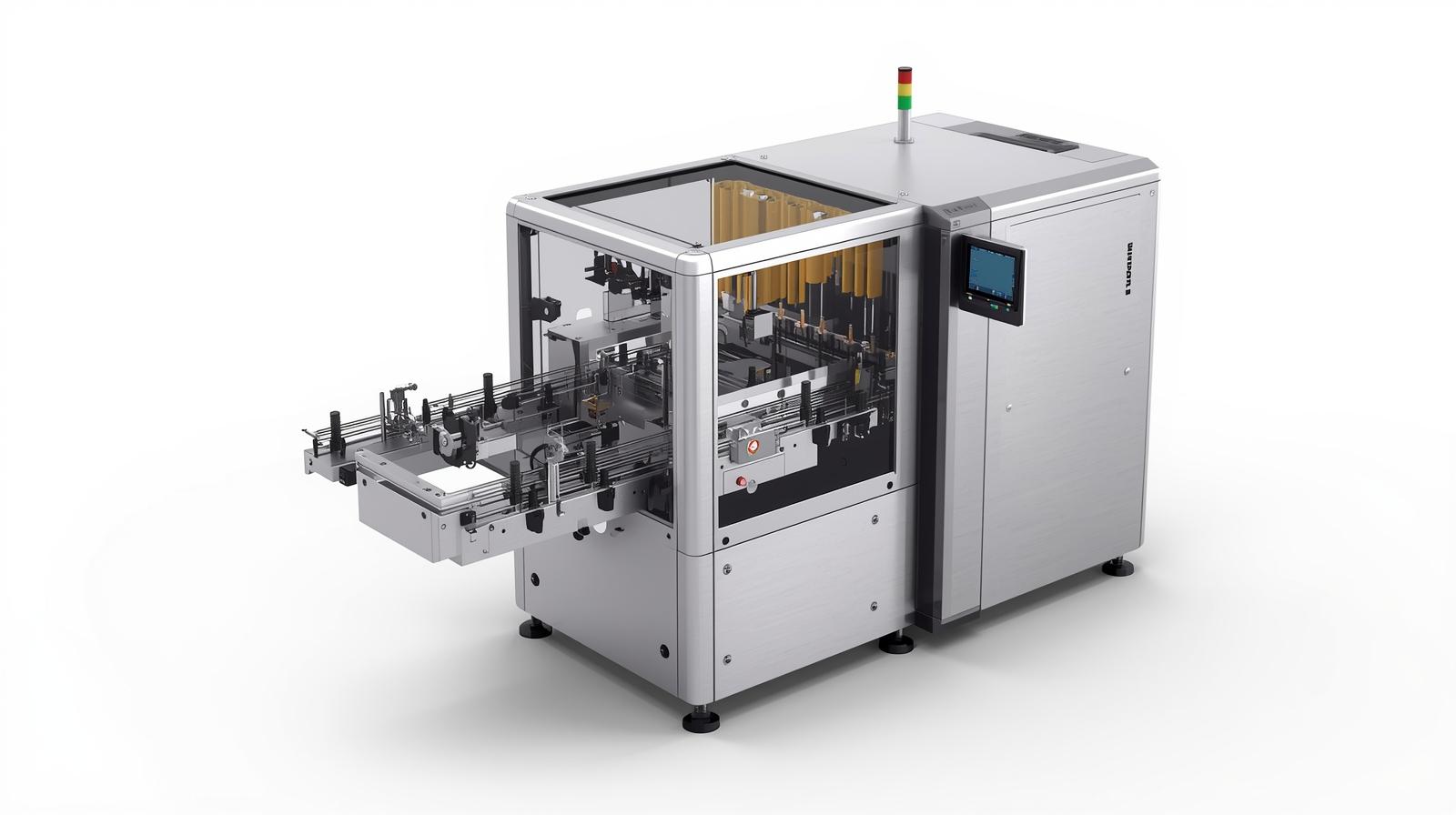
Safety and Compliance for Tape and Reel Machines – The Ultimate Guide
Meta Description: Your complete guide to tape and reel machine safety & compliance. Explore OSHA, CE, IPC standards, ESD control, operator training, and best practices for a safe, efficient, & compliant packaging line.
Introduction
In the high-speed, precision-driven world of electronics manufacturing, the tape and reel machine is a cornerstone of efficiency. Automating the packaging of surface-mount devices (SMDs) for use with pick-and-place systems, these machines are vital for maintaining production flow. However, like any industrial equipment, they present a range of safety risks and are subject to stringent compliance standards.
Neglecting safety and compliance isn’t just a regulatory misstep—it’s a direct threat to personnel well-being, product quality, and overall operational integrity. From mechanical injuries and electrostatic discharge (ESD) to noise exposure and ergonomic strains, the hazards are real and multifaceted.
This comprehensive FAQ guide is designed to be your ultimate resource. We will delve deep into the critical aspects of tape and reel machine safety, demystify complex compliance regulations, and provide actionable best practices to ensure your facility operates safely, efficiently, and within the bounds of international standards.
Section 1: Fundamental Safety for Operators and Personnel
This section covers the immediate, physical safety concerns for anyone interacting with or working near tape and reel equipment.
Q1: What are the most common physical hazards associated with operating a tape and reel machine?
A: Tape and reel machines, while largely automated, contain several points where operators can be injured if proper precautions are not taken. The most common hazards include:
- Pinch and Nip Points: These are found wherever moving parts meet, such as:
- The feed mechanism that advances the carrier tape.
- The cover tape sealing rollers.
- The chain and sprockets that drive the reel take-up.
- Any gears, belts, or linkages within the machine enclosure.
- Crushing Hazards: The act of loading and unloading large, heavy reels (especially 13-inch or 15-inch reels) poses a significant crushing risk to fingers and hands if the reel is dropped or mishandled.
- Cutting Hazards: The blades used for cutting the carrier tape (if applicable) or the cover tape are extremely sharp. Accidental contact during setup, clearing a jam, or maintenance can cause severe lacerations.
- Entanglement Hazards: Loose clothing, jewelry, or long hair can be caught in rotating parts like the reel hubs or drive shafts, leading to serious injury.
- Repetitive Strain Injuries (RSI): Operators performing frequent, repetitive motions like loading component trays, feeding tape, or inspecting parts can develop RSIs over time.
Q2: What Personal Protective Equipment (PPE) is mandatory for operators?
A: PPE is the last line of defense. The minimum requirements typically include:
- Safety Glasses: To protect eyes from flying debris if a component is mispicked or a tape snaps, and from any cleaning chemicals used.
- Cut-Resistant Gloves: Essential for handling sharp carrier tapes and during any blade-related adjustments. The gloves should offer dexterity to handle small components.
- ESD Smocks and Wrist Straps: While primarily for component protection, they are a critical part of the overall safety protocol in an ESD Protected Area (EPA).
- Closed-Toe, Anti-Static Shoes: To protect feet from dropped reels or components and to complete the ESD grounding path.
- Hearing Protection: In environments with multiple high-speed machines, the cumulative noise level may require hearing protection to prevent long-term damage.
Q3: What are the essential Lockout/Tagout (LOTO) procedures for tape and reel machines?
A: Lockout/Tagout is a non-negotiable safety standard (e.g., OSHA 29 CFR 1910.147) designed to safeguard employees during service and maintenance.
- Preparation: The authorized employee identifies all energy sources needing control (electrical, pneumatic).
- Notification: All affected employees are notified that the machine will be shut down and locked out.
- Shutdown: The machine is powered down using its normal stopping controls.
- Isolation: Every energy source is physically isolated. This means unplugging the machine or turning off the main electrical disconnect, and closing pneumatic valves to isolate air pressure.
- Application of Locks and Tags: Each authorized employee working on the machine places their own personal lock and tag on the energy isolation device(s). The tag must clearly state who has locked the device and why.
- Release of Stored Energy: Any residual or stored energy must be dissipated. This includes bleeding pneumatic pressure from the lines, allowing capacitors to discharge, and ensuring that the reel tension is released.
- Verification of Isolation: Before starting work, the employee must verify that the machine is truly de-energized by attempting to start it (pressing the start button) and ensuring it does not operate. This verification step is critical.
- Release: Once work is complete, the machine is reassembled, tools are removed, and employees are cleared from the area. Only then can each employee remove their own lock and tag, before the machine is re-energized.
Section 2: Machine Guarding and Mechanical Safety
This section focuses on the built-in and additional safety features of the machine itself.
Q4: What are the requirements for machine guarding on a tape and reel system?
A: Machine guarding is a primary safety measure designed to prevent contact with moving parts. Requirements are outlined in standards like OSHA 1910.212 and the Machinery Directive 2006/42/EC.
- Fixed Guards: These are permanent parts of the machine, such as the main enclosure that covers the drive mechanisms, gears, and belts. They should be removable only with tools.
- Interlocked Guards: These are crucial for areas requiring frequent access, such as the tape path and sealing head. When the guard door is opened, an interlock switch immediately cuts power to the hazardous motions (rollers, drives) while allowing the control system to remain on for diagnostics. The machine should not be able to run with an interlocked guard open.
- Self-Adjusting Guards: These are less common on modern tape and reel machines but may be present on the tape inlet, moving to accommodate the tape while still shielding the pinch points.
- Guard Construction: Guards must be durable, securely fastened, and not create any new hazards (e.g., sharp edges).
Q5: How do emergency stop functions work, and how should they be tested?
A: Emergency stop (E-stop) buttons are critical, fail-safe devices. They are typically red on a yellow background and are mushroom-headed for easy activation.
- Function: When pressed, an E-stop initiates a Category 0 or Category 1 stop (per ISO 13850).
- Category 0: An uncontrolled stop by immediately removing power to the machine actuators. This is the most common for immediate hazard mitigation.
- Category 1: A controlled stop where power is maintained to bring the machine to a halt before being removed.
- Testing and Verification: E-stops must be tested regularly as part of a preventative maintenance schedule.
- With the machine running at normal operational speed, press the E-stop button.
- Verify that all motion ceases immediately.
- Check that power is removed from the drive motors, sealing head, and feed mechanism.
- Attempt to restart the machine. It should not be possible to restart simply by releasing the E-stop. A separate, deliberate reset action (usually by twisting or pulling the button) is required to restore power.
Q6: What role does pneumatic safety play?
A: Many tape and reel machines use pneumatic cylinders for actuation. Key safety considerations include:
- Pressure Regulation: Systems must have regulators to ensure air pressure does not exceed the designed limits of the components.
- Filter-Lubricator-Regulator (FRL) Units: These ensure clean, dry, and properly lubricated air, which prevents erratic operation and component failure.
- Residual Pressure Release: As part of LOTO, there must be a safe method to bleed off all pressurized air from the system to prevent accidental cylinder movement during maintenance.
- Hose Integrity: Regular inspection for wear, cracks, or leaks is essential, as a ruptured hose can whip dangerously.
Section 3: Electrical Safety, ESD, and Thermal Hazards
This section addresses the invisible threats of electricity, static discharge, and heat.
Q7: What are the key electrical safety standards for tape and reel machines?
A: Compliance with electrical safety is paramount. Key standards include:
- UL 508A (USA): Standard for Industrial Control Panels.
- NFPA 79 (USA): Electrical Standard for Industrial Machinery.
- IEC 60204-1 (International): Safety of machinery – Electrical equipment of machines.
These standards mandate requirements for: - Proper Disconnect: A main electrical disconnect switch must be easily accessible.
- Safe Wiring: Correct wire sizing, color-coding, and strain relief.
- Overcurrent Protection: Fuses or circuit breakers to protect against short circuits and overloads.
- Grounding: The machine chassis and all conductive parts must be properly bonded and grounded to prevent electric shock.
Q8: Why is ESD protection so critical, and how is it implemented?
A: Electrostatic Discharge (ESD) can instantly destroy or degrade sensitive microelectronics without any visible signs. A tape and reel machine is a primary handling point, making ESD control non-negotiable.
- The ESD Association Standards: ANSI/ESD S20.20 is the primary standard for developing an ESD control program.
- Implementation on the Machine:
- ESD-Safe Materials: All surfaces that components contact (guides, rails, nests) must be made of static-dissipative materials.
- Proper Grounding: The entire machine frame must be connected to the facility’s common ground point.
- Ionizers: If non-conductive materials (like certain plastics) are unavoidable, air ionizers are used to neutralize static charges on them.
- The ESD Protected Area (EPA): The machine should be located within an EPA, which includes:
- ESD-rated workbenches and flooring.
- Constant monitoring of wrist straps and worksurface grounds.
- Humidity control (40-60% RH is ideal).
- Mandatory use of ESD smocks and wrist straps by all personnel.
Q9: What thermal hazards are present during the cover tape sealing process?
A: The heat sealing process involves a thermally controlled sealing head that can reach temperatures high enough to melt the acrylic coating on the cover tape (typically 150°C – 200°C / 300°F – 400°F).
- Burn Hazard: Direct contact with the sealing head, the recently sealed tape, or any heated components will cause severe burns.
- Guarding: Interlocked guards are essential to prevent access to the sealing head while it is hot.
- Temperature Indicators and Alarms: The machine should have clear indicators showing the sealing head temperature and should feature alarms for overtemperature conditions.
- Cool-down Period: After shutdown, the machine should have a warning indicating that the sealing head remains hot and requires time to cool.
Section 4: Compliance with Major International Standards and Regulations
This section decodes the complex web of regulations that govern machinery safety.
Q10: What does CE Marking mean for a tape and reel machine, and how is it achieved?
A: The CE mark is a manufacturer’s declaration that the product complies with the essential health, safety, and environmental requirements of the European Economic Area.
- The Machinery Directive 2006/42/EC is the core directive. To achieve CE marking, the manufacturer must:
- Perform a Risk Assessment: Identify all potential hazards and implement measures to reduce the risks.
- Apply Relevant Harmonized Standards: Use standards like EN ISO 12100 (risk assessment), EN 60204-1 (electrical safety), and EN ISO 13849-1 (safety-related parts of control systems) to demonstrate conformity.
- Compile a Technical File: Document all design, risk assessment, and testing data.
- Issue a Declaration of Conformity.
- Affix the CE Mark.
Q11: What are the key OSHA standards applicable in the United States?
A: The Occupational Safety and Health Administration (OSHA) provides enforceable standards for workplace safety.
- 29 CFR 1910.212 – General Requirements for All Machines: Mandates that machines must have one or more methods of guarding to protect the operator.
- 29 CFR 1910.147 – The Control of Hazardous Energy (Lockout/Tagout): As discussed previously.
- 29 CFR 1910.307 – Hazardous (Classified) Locations: If the machine is used in an environment with flammable vapors or dust.
Q12: How do IPC standards relate to the tape and reel process?
A: While IPC standards focus on product quality, they are intrinsically linked to the machine’s performance and, by extension, safety and compliance.
- IPC-7527: “Requirements for Solder Paste Stencil and Laser Cut Auxiliary Tooling Design” touches on component packaging considerations.
- IPC-WP-023: “Guidelines for Tape and Reel for Area Array Components” provides detailed recommendations on packaging to prevent damage, which aligns with the machine’s need for gentle handling and proper ESD control.
- IPC-A-610: “Acceptability of Electronic Assemblies” is the final arbiter of quality. A machine that causes component marking, cracking, or orientation issues will produce non-conforming products, indicating a process that is not under control—a compliance issue in its own right.
Section 5: Operational Safety, Quality Control, and Training
This section ties everything together into daily operational practices.
Q13: What should be included in a comprehensive operator training program?
A: A well-trained operator is the most effective safety and quality control feature. Training must be hands-on and documented.
- Safety-Specific Training: LOTO procedures, PPE requirements, ESD awareness, emergency procedures, and hazard identification.
- Machine Operation: Step-by-step procedures for setup, operation, and shutdown.
- Changeover Procedures: Safe practices for switching between different component types and reel sizes.
- Basic Troubleshooting and Jam Clearing: How to safely clear common jams without bypassing guards or risking injury.
- Preventative Maintenance: Basic daily and weekly maintenance tasks like cleaning and inspection.
Q14: How does a robust Quality Control (QC) process enhance safety?
A: Quality and safety are two sides of the same coin. A poorly functioning machine will not only produce bad product but is also more likely to be unsafe.
- In-Process Checks: Regular verification of:
- Polarity and Orientation: Ensuring components are placed correctly in the pocket.
- Sealing Integrity: The cover tape must be sealed properly to prevent components from falling out.
- Pocket Damage: The machine must not crack, scratch, or otherwise damage the components or the carrier tape.
- Vision System Calibration: If the machine uses a vision system for inspection, it must be regularly calibrated to ensure it correctly identifies errors and rejects faulty parts.
- Data Logging: Modern machines can log error codes, jam frequency, and maintenance alerts. Analyzing this data can predict failures before they lead to safety incidents or major quality issues.
Q15: What are the essential steps for creating a safe and compliant tape and reel workflow?
A: It’s a holistic approach that integrates people, processes, and technology.
- Risk Assessment: Start with a formal risk assessment of the entire process, from material handling to the finished reel.
- Procure Compliant Equipment: Ensure new machines are purchased from reputable manufacturers that provide full documentation, including CE/UL marks, technical files, and detailed safety manuals.
- Implement and Enforce Procedures: Develop clear, written Standard Operating Procedures (SOPs) for all tasks, emphasizing safety and LOTO.
- Invest in Continuous Training: Safety training is not a one-time event. Conduct regular refreshers and updates.
- Foster a Culture of Safety: Empower every employee to stop the line if they perceive an unsafe condition. Safety must be a core value, not just a set of rules.
- Audit and Improve: Conduct regular internal audits of your safety and quality processes. Use the findings to continuously improve your system.
Conclusion
Navigating the landscape of safety and compliance for tape and reel machines is a complex but absolutely essential endeavor. It requires a diligent, multi-faceted approach that encompasses mechanical guarding, electrical safety, ESD protection, rigorous operational procedures, and comprehensive operator training.
By understanding and implementing the principles and standards outlined in this guide—from OSHA and CE marking to IPC and ESD S20.20—you are not merely checking boxes for regulatory compliance. You are actively building a foundation for a world-class manufacturing operation. This foundation protects your most valuable assets: your people and your products. It minimizes downtime, reduces scrap and rework, and ultimately, ensures the long-term reliability and success of your production line.
Investing in safety and compliance is not a cost; it is the most valuable insurance policy for the future of your business.