
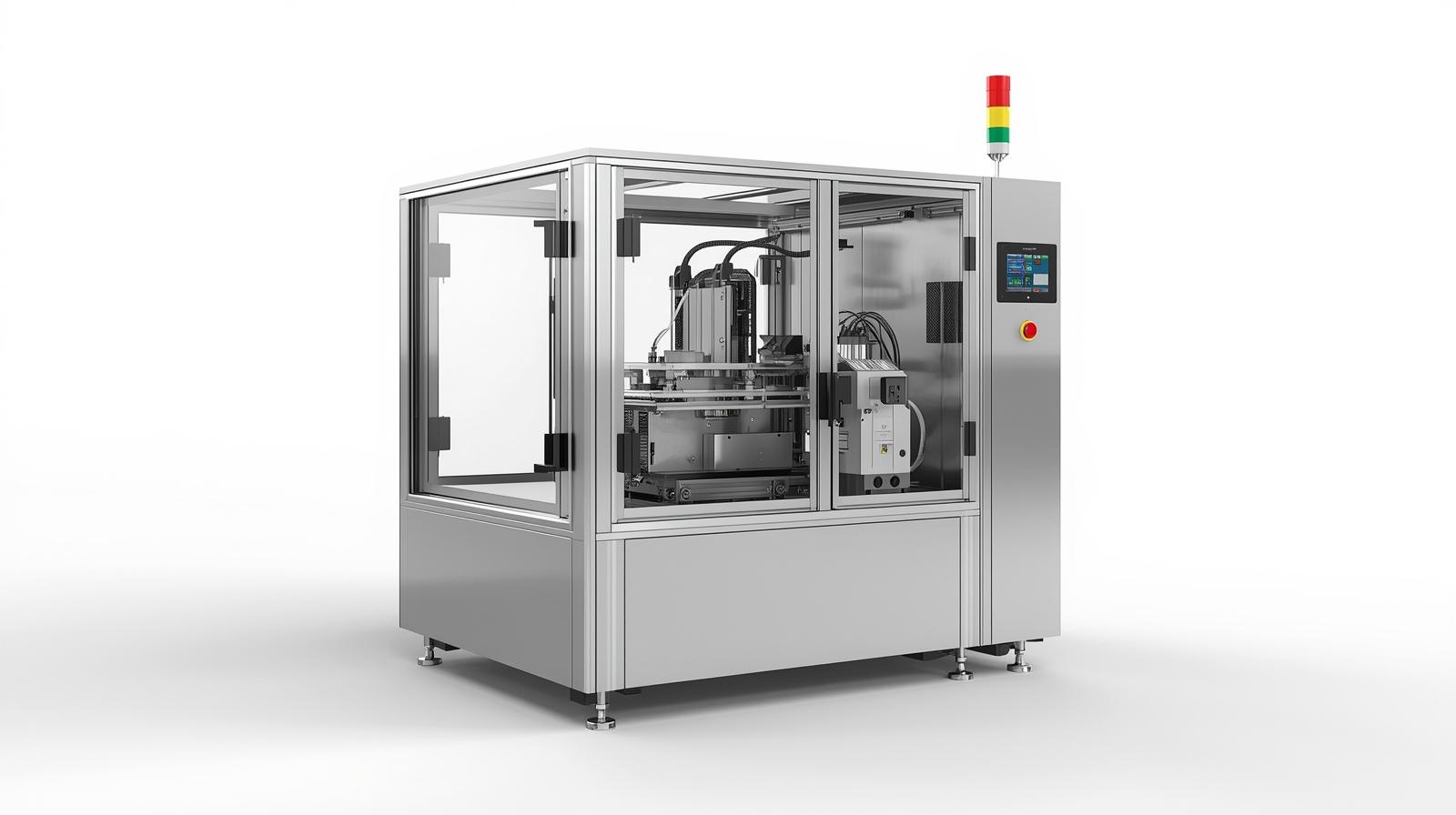
Comparing Tape and Reel Machine vs Manual Packaging: Pros and Cons
The Conquest of the Minute: The Civilizational Choice Behind Automated Tape and Reel Packaging and Manual Packaging
The Conquest of the Minute: The Civilizational Choice Behind Automated Tape and Reel Packaging and Manual Packaging
In the warehouse of an electronic components factory in Shenzhen, two worlds operate in parallel. On one side, several workers sit at workbenches, wearing magnifying glasses and anti-static gloves, carefully placing tiny resistors, capacitors, and transistors into plastic trays. On the other side, a fully automated tape and reel machine emits a rhythmic mechanical sound, encapsulating thousands of components precisely into plastic tape and winding them into neat reels, much like a loom. These two scenes represent a fundamental divide in the packaging sector of manufacturing: an age-old dialogue between efficiency and precision, and the human touch.
1. Defining the Battlefield: What Exactly Are We Discussing?
Before delving into the comparison, it is essential to clarify the subjects of discussion. Tape and reel packaging is an automated method for packaging electronic components. It involves placing tiny components into the pockets of a plastic carrier tape, sealing them with a cover tape, and finally winding them onto reels. This packaging format is directly compatible with Surface Mount Technology (SMT) production and has become the standard front-end process in electronics manufacturing.
Manual packaging, on the other hand, encompasses a range of traditional methods: placing components into plastic tubes, trays, or anti-static bags, relying entirely on manual operations. The contest between these two approaches is particularly intense in the packaging of precision components such as chips, sensors, and LEDs, especially in small-batch, high-mix production environments.
2. Embodiment of Two Philosophies: Machine Logic vs. Human Touch
The tape and reel machine is the perfect embodiment of industrial rationality. This equipment typically includes a vibration feeder, a vision inspection system, a carrier tape forming and heat-sealing unit, and a winding mechanism. Its workflow strictly follows a preset program: components are sorted via vibration, precisely placed into the carrier tape pockets, inspected, sealed, and finally wound onto reels. The entire process requires almost no human intervention, forming a closed, controllable micro-assembly line.
In contrast, manual packaging resembles the continuation of ancient craftsmanship. Operators use simple tools—tweezers, magnifying glasses, counters—to sort, count, and place components into packaging containers. This process is full of human-specific adaptability: operators can instantly identify abnormal components, adjust their grip, and handle irregular shapes that machines struggle with. However, this flexibility also introduces uncertainty: fatigue, distraction, and emotional fluctuations can all affect packaging quality.
3. In-Depth Comparison Across Eight Dimensions
1. Efficiency and Throughput: The Absolute Reign of Numbers
The efficiency advantage of tape and reel machines is overwhelming. A standard machine can process 15,000 to 80,000 components per hour, depending on the size and complexity of the components. In comparison, a skilled worker can manually package at most 2,000–5,000 small components per hour, and this pace cannot be sustained over an eight-hour shift.
However, there are subtle nuances behind the numbers. The “changeover time” for manual packaging is almost zero—switching products only requires clearing the workbench. In contrast, changing products on a tape and reel machine involves adjusting vibration feeder parameters, replacing carrier tapes and reels, and recalibrating the vision system, which can result in 30 minutes to 2 hours of downtime. Therefore, in small-batch, high-mix production, manual packaging may actually yield higher overall output.
2. Precision and Consistency: Conquering the Micro-World
In terms of precision, machines demonstrate a merciless superiority. Modern tape and reel machines achieve placement accuracy of up to ±0.05 mm, virtually eliminating human error. Vision inspection systems can identify defects such as dimensional deviations, pin deformations, and marking errors, ensuring consistency across every reel of products.
Manual packaging is limited by human physiological constraints. Even under optimal conditions, an operator’s placement accuracy rarely exceeds ±0.1 mm, and precision declines over time due to fatigue. However, humans still hold an advantage in identifying certain types of defects—such as subtle color variations or surface texture abnormalities—which may evade machine algorithm detection.
3. Flexibility: The Last Bastion of Human Creativity
When product variability becomes the norm, the flexibility of manual packaging shines. Operators can quickly adapt to new component shapes, packaging requirements, and special handling needs (such as additional protection for ESD-sensitive components). This adaptability is irreplaceable in R&D stages, small-batch custom products, and prototype development.
The flexibility of tape and reel machines is improving. Modular designs allow for relatively quick changes to handle components of different sizes, and intelligent vision systems can “learn” to recognize new components. However, increased machine adaptability comes at a cost: each product change requires reprogramming and debugging, adding complexity and downtime.
4. Initial Investment and Operational Costs: A Long-Term Game
The price of a standard tape and reel machine ranges from $30,000 to $200,000, with high-end models exceeding $500,000. Additionally, consumables such as carrier tapes and cover tapes are required. In contrast, the initial investment for manual packaging is minimal: workbenches, simple tools, and packaging materials.
However, cost analysis must consider the full lifecycle. One tape and reel machine can replace 5–20 packaging workers. With an average annual cost of $15,000 per worker, the payback period for the investment is typically 1–3 years. This economic advantage is even more pronounced in regions with high labor costs. The “hidden costs” of manual packaging—including training, quality control, rework, and injury risks—are often underestimated.
5. Quality Control: The Philosophy of Prevention vs. Detection
Tape and reel packaging “builds in” quality control during the process. Vision inspection systems monitor each step in real time, and defective components can be immediately rejected when detected. This “preventive” quality control, supported by Statistical Process Control (SPC), achieves extremely low defect rates.
Quality control in manual packaging primarily relies on “detection.” Sampling inspections are typically used, which may miss individual defects. However, human judgment can identify complex defect patterns, while machines can only detect predefined defect types. When packaging extremely precise components, experienced operators can detect subtle issues through tactile feedback that machines cannot identify.
6. Traceability and Data Integration: The Frontier of Digital Twins
Modern tape and reel machines are natural nodes of Industry 4.0. Each reel of products comes with complete production data: timestamps, machine parameters, inspection results, operator information, and more. This data integrates with Manufacturing Execution Systems (MES), enabling full traceability. If a component exhibits quality issues, it can be traced back to the exact batch or even the specific position on the reel.
Traceability in manual packaging is limited. It typically only extends to the batch level and relies on paper records or simple spreadsheets, which are prone to errors or omissions. In industries with stringent traceability requirements, such as aerospace and medical devices, this is a significant hurdle for manual packaging.
7. The Human Factor: Skills, Satisfaction, and Ethical Considerations
Manual packaging provides employment opportunities for low-skilled labor, which is particularly important in developing regions. However, this work is highly repetitive and monotonous, leading to occupational burnout and physical strain (such as vision deterioration and repetitive strain injuries). Operators require months of training to master these skills, but once acquired, these skills are often difficult to transfer to other roles.
Automated packaging eliminates monotonous work but also eliminates jobs. Factory managers face the challenge of balancing efficiency gains with community responsibility. The most successful enterprises typically adopt incremental automation while providing retraining for affected workers, transitioning them to roles that require human judgment, such as quality control, equipment maintenance, or production planning.
8. Environmental Impact: The Hidden Ecological Footprint
Tape and reel packaging consumes plastic carrier tapes and cover tapes, which are often non-biodegradable and contribute to plastic waste. However, centralized production may reduce overall energy consumption and transportation emissions. Some manufacturers have begun using recyclable or bio-based materials for carrier tapes.
The direct environmental impact of manual packaging is smaller, as the trays and tubes used are often reusable. However, decentralized operations may lead to inefficient use of space and energy. A comprehensive environmental impact analysis must consider the entire supply chain, from raw material extraction to final disposal.
4. Application Scenarios: No One-Size-Fits-All Solution
Areas Where Tape and Reel Machines Excel:
- High-volume standardized products (e.g., consumer electronics components)
- Applications with stringent precision and consistency requirements (e.g., automotive electronics, medical devices)
- Regions with high labor costs
- Industries requiring full traceability
Domains Where Manual Packaging Holds Its Ground:
- Small-batch, high-mix production (e.g., R&D samples, custom products)
- Components with unconventional shapes or sizes
- Sensitive components requiring special handling (e.g., ultra-high ESD protection)
- Regions with low labor costs and limited capital
- Packaging of artistic or collectible electronic components (e.g., high-end audio components)
5. The Path to Integration: A New Paradigm of Human-Machine Collaboration
The most advanced packaging solutions are blurring the lines between the two approaches. Semi-automated systems combine the precision of machines with the flexibility of humans: machines handle repetitive tasks, while operators focus on exception handling and quality judgment. Collaborative robots (cobots) share workspace with workers, performing physically demanding or high-precision tasks while maintaining human supervision.
Intelligent assistance systems provide manual packaging operators with augmented reality guidance: AR glasses display component placement, counting, and quality requirements, reducing errors and improving efficiency. These hybrid systems represent the future of manufacturing: not machines replacing humans, but enhancing human capabilities.
6. Industry Trends: Moving Beyond Binary Oppositions
Tape and reel technology is evolving toward greater flexibility. Adaptive machine learning algorithms enable machines to handle more component types; modular designs shorten changeover times; cloud connectivity allows for remote monitoring and predictive maintenance. Simultaneously, manual packaging is also advancing: ergonomic workstations, intelligent counting tools, and digital quality control tools improve efficiency and precision.
Both approaches are shifting toward sustainability. Tape and reel machine manufacturers are developing thinner, recyclable carrier tape materials, while manual packaging is exploring eco-friendly trays and reusable containers. Under the circular economy concept, packaging is not merely a means of protecting products but also part of the resource flow.
7. Decision-Making Framework: How to Choose for Your Business
Choosing a packaging method should not be a simple cost calculation but a strategic decision. Consider the following framework:
- Product Characteristic Analysis: What are the component size, shape, fragility, and ESD sensitivity?
- Volume-Variety Balance: What are the production batch sizes and product changeover frequencies?
- Quality Requirements: What are the customer’s tolerance for defect rates and traceability requirements?
- Resource Constraints Assessment: What are the limitations in initial capital, labor skills, and facility space?
- Strategic Direction Considerations: Is the goal cost leadership, differentiation, or focusing on a specific niche market?
By weighting and scoring these factors, businesses can make rational choices. In many cases, a hybrid solution—using tape and reel machines for high-volume products and manual packaging for small-batch specialty products—may be the optimal approach.
Conclusion: The Civilizational Metaphor in Packaging
In the micro-world of electronic component packaging, we witness the fundamental tension of modern civilization: the eternal dialogue between efficiency and humanity, standardization and diversity, mechanical precision and human adaptability. The tape and reel machine represents humanity’s ambition to impose order on the material world, while manual packaging reminds us of the irreplaceable value of touch, judgment, and adaptation.
The most successful manufacturing enterprises do not simply choose one side but understand the essence of both, creating work environments where humans and machines coexist symbiotically. In such settings, machines handle predictable, repetitive tasks, freeing humans to solve unconventional problems, optimize processes, and create value. This collaboration is not merely a technical arrangement but an ethical choice for industrial civilization—acknowledging the importance of efficiency while affirming the dignity of human labor.
As artificial intelligence and robotics advance, automation in the packaging sector will continue to deepen. However, the human role will not disappear; instead, it will evolve into more complex supervisory, maintenance, and innovative functions. Ultimately, the best packaging system is neither fully automated nor entirely manual but one that intelligently combines the strengths of both—much like the best societies are neither purely collectivist nor purely individualist but find a dynamic balance between order and freedom.
When we gaze at those tiny components encapsulated in plastic tape, we see not only technological products but also the crystallization of human wisdom: mastery over matter, the pursuit of efficiency, and the relentless exploration of our own value. In this sense, choosing a packaging method is not merely a technical decision but a profound statement about the kind of working world and industrial civilization we aspire to create.