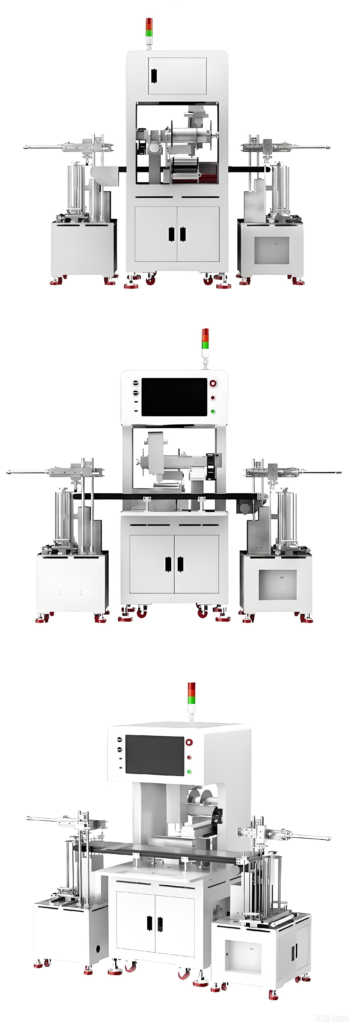
Automatic Labeling Machines: The “Precision Hand” of Smart Manufacturing
On modern production lines, a seemingly simple action—labeling—is quietly undergoing a transformation. From food packaging and pharmaceutical bottles to electronic products and chemical containers, the precise placement of each label is powered by the silent work of automated labeling machines. More than carriers of product information, these machines have become critical to quality control, brand presentation, and supply chain efficiency.
What Is an Automatic Labeling Machine?
An automatic labeling machine is an intelligent system that uses mechanical, electronic, and computer-controlled technologies to complete the entire labeling process—label feeding, pickup, positioning, application, and pressing—without manual intervention. Compared with traditional hand labeling, it delivers higher efficiency, greater accuracy, and superior consistency, making it an essential component of modern industrial automation.
Core Components and Operating Principles
A typical automatic labeling machine consists of the following key systems:
- Label Feeding System – Ensures smooth and continuous release of label rolls
- Label Pickup Mechanism – Mechanical arms or vacuum nozzles precisely pick individual labels
- Positioning System – Sensors detect product position to guarantee accurate label placement
- Application Unit – Applies labels evenly and securely onto product surfaces
- Control System – PLC or industrial PC enabling programmable parameter adjustment
- Inspection System – Vision-based verification of label position, quality, and content accuracy
High-end labeling machines now integrate machine vision, IoT connectivity, and artificial intelligence, enabling real-time parameter optimization, self-diagnostics, and seamless communication with other production equipment—paving the way toward truly intelligent manufacturing.
Cross-Industry Applications of Automatic Labeling Machines
1. Food & Beverage: Ensuring Safety and Efficiency
In the fast-moving consumer goods sector, labeling speed directly impacts throughput. Automatic labeling machines can process hundreds to thousands of products per hour—far beyond human capability. More importantly, they ensure consistent label placement, reinforcing brand professionalism. For variable data such as production dates, batch numbers, or QR codes, automated systems can print and apply labels in real time, supporting food safety and traceability requirements.
Case Example:
After introducing a high-speed wrap-around labeling machine, a leading beverage manufacturer increased line speed by 40% and reduced mislabeling rates from 0.5% to 0.01%. Savings from reduced product waste alone exceeded one million RMB annually.
2. Pharmaceuticals & Medical Devices: The Lifeline of Compliance
The pharmaceutical industry demands extreme accuracy—any labeling error can have serious consequences. Automatic labeling machines provide millimeter-level precision and integrate with MES systems to ensure absolute traceability between products, labels, and data. Cleanroom-compatible designs also meet GMP requirements, minimizing contamination risks.
Typical Applications:
- Precise labeling of vials and ampoules
- Automatic application of UDI (Unique Device Identification) labels for medical devices
- Real-time printing and application of pharmaceutical traceability codes
3. Cosmetics & Personal Care: Balancing Aesthetics and Function
Cosmetic packaging often features complex shapes and diverse label materials such as clear labels, holographic films, or specialty papers. Automatic labeling machines equipped with customized labeling heads can handle curved or recessed surfaces while maintaining bubble-free, wrinkle-free application—preserving the premium appearance of high-end products.
4. Electronics & Semiconductors: Precision in Microscopic Spaces
Electronic components and PCBs offer extremely limited labeling space—sometimes less than one square centimeter. High-precision vision-guided labeling systems achieve micrometer-level positioning accuracy, enabling reliable labeling at microscopic scales while preventing electrostatic damage to sensitive components.
5. Chemicals & Logistics: Durability and Traceability
Chemical products often require labels that withstand harsh environments. Automated systems support specialized processes such as hot-melt adhesive labeling to ensure long-term durability. In logistics, automatic labeling systems work in conjunction with sorting lines to print and apply shipping labels in real time, significantly improving operational efficiency.
Technology Trends and Selection Considerations
Future Development Trends
- Flexibility – Rapid changeover to support small-batch, multi-variant production
- Intelligence – AI-driven vision inspection, adaptive adjustment, predictive maintenance
- Integration – Deep connectivity with other production equipment and unified data flows
- Sustainability – Reduced energy consumption and minimized label and adhesive waste
Key Factors in Equipment Selection
- Production Requirements – Speed, accuracy, label types, and product diversity
- Space Constraints – Compatibility with existing line layout and footprint limitations
- Budget & ROI – Equipment cost, maintenance expenses, and efficiency gains
- Scalability – Upgrade potential and future expansion capability
- Supplier Support – Technical service, training, and after-sales responsiveness
Conclusion: From “Auxiliary Step” to Value Creation
Automatic labeling machines have evolved from simple functional devices into critical nodes of intelligent manufacturing. They are no longer just about applying paper or film, but about connecting products, data, and consumers through a smart interface. In the era of Industry 4.0, labeling automation represents a powerful entry point for manufacturers pursuing digital transformation.
For manufacturers, investing in automated labeling systems is not merely about improving efficiency—it reflects a commitment to quality culture. When every product carries its identity information at precisely the same position and with the same finish, it signals control over detail, dedication to quality, and respect for the end customer.
At the moment a label meets a product, the automatic labeling machine completes a perfect fusion of industrial aesthetics and functional precision—an embodiment of the intelligence and refinement of modern manufacturing.